

Mainstream Celebrity Mediumship
psychic mediumship, public personas, and the progression of ideologies

Dear Reader,
Pull up a seat at the cozy coffee table! I’ve brewed a pot of leafy tea with honey drops to sweeten your sips. Pretend it’s the middle of winter and the snow is creating an acoustic foam of soundlessness between us and everything else. Let our silly gossip be absorbed by the reduction. There’s plenty of tea to replenish our cups while we consider my topic for today:
Mediumship 👻 and Celebrity 🔮
We’ll be exploring the topic by setting the scene on a literal stage, and you know, that’s fun! We’re also boarding a ship, possibly another ship after that one, and then we’ll settle into the library.
Choose Your Fighter
You know her—she’s iconic, unforgettable, and probably made your mom cry several times in an era before this one—ladies and gentleman, welcome Theresa Caputo to the stage! If you don’t remember her, think about a blonde Long Island mother who interrupts your pilates class because grandpa is too loud in her left ear. She’s familiar because her show aired for 14 seasons on TLC from 2011 to 2019, and also because she was mother-in-spirit to us all.
Next, and I’d be remiss if I didn’t bring him out sooner than later, please welcome Tyler Henry! If you ask me, his best work was on the episode reading of skeptical Steve-O in which Tyler received a brain scan with a neuroscientist at the request of celebrity Dr. Drew. Don’t get your Theresas confused, though, because we have another incredibly supportive mother figure making waves in the background of Tyler’s readings. His recent Netflix special was filmed live for viewers so as to double-down on the talent he’s already shown us over the years. His empathy is unmatched.
Paranormal superstar Chip Coffey has also joined us for the party! His investigative support is delightful to watch. We love to see it when he gasps because it’s his giddy tell that the ghost is, in fact, there in the room with them. He’s happy to be there, even if the spook-level reaches a pinnacle.
By the graces of online followings and influencership, Megan Alisa and Michael Mayo rise to the occasion as an Evidential Mediumship instructors. If you’re interested in discovering your psychic talents, The Oakbridge Institute is standardizing what it means to scaffold your psychic development. They’ve made quite an impact on the public regarding standards for evidence in a reading with the spirits of the dead.
Author and Historical Medium Emily Dexter has also joined us today. She travels to charged, historic places and guides folks through the activation of spirit while maintaining weekly energy readings for viewers on Instagram and TikTok. Her newest story will soon debut, so make sure to check it out.
Give it up for our guests, everyone! When it comes to celebrity mediumship, these people are profoundly powerful. Being in the public eye and also being viewed as a viable medium is a complex undertaking. And while there are names who did not make this list, the unmentioned are no less viable as mediums. In fact, I am willing to bet that there are more viable mediums who remain unseen so that they may do their work with rigor and not regret. Celebrity can make or break a person, so too can the height of influencership, and to me, it is a particularly brave thing to be famous for talking to dead people.
The Ship of Theseus
If, over time, all the planks and parts of a ship are replaced, is it still the same ship?

In contemporary philosophy of the mind, this thought experiment is about the persistence of personal identity. In other words, are you, dear reader, the same person you were when you were 7 years old? The question is more pertinent when you think about how, even though there is variation, all the cells in the human body are regenerated in 7-10 years. Trippy.
The paradox illustrates for us a way to understand the argument I’ll make about mediumship, public personas, and the progression of ideologies.
I don’t want to introduce you to the obvious caveat, but I feel like it’s necessary. Dear reader, I am also a psychic medium. Just as well, I am not a celebrity or influencer. Drawing your attention to these facts are to remind you of my bias, not to bore you to death. It’s necessary because I don’t understand the complexities of being super seen; moreover, I’ve never tried group or stage readings, which I would love to do one day. My efforts in this essay aren’t to slander the medium, I promise. In fact, I want to impress that mediumship has been made more publicly available and acceptable because of people like Theresa and Tyler. Without them leading in front of a camera, most folks would still think mediumship is “dark” magic from the Middle Ages.
My next caveat is about anti-Black racism and xenophobia. If you’ll notice my guests, most of them are white people, or benefit from white supremacy. The caveat is that I am also a white people, and therefore can only speak to my observation of where and when white people need to do better based on my interpretation and involvement in multicultural places where spiritual and psychic conversations are happening. People like Theresa and Tyler get to be on stage and sell their tickets so easily because they benefit from white privilege. This is extremely important to note because when mediums start talking about “love and light,” and “denying the darkness,” we are in a metaphorical realm that informs how we perceive the folks around us. It’s not just about spiritually bypassing shadow work, an effort that’s developmentally necessary, this preference for light work is indicative of wrongly-placed fear and the sinuous, venomous dogmas of “Christianity.” (There’s gotta be another term for the contemporary religion that’s surfaced as a result of historical Christianity; I’m tired of hyphenated concepts.)
Sure, we can argue that discernment in a reading may allude to the fact that, for example, the spirit of a dead relative comes across as bad person and creates bad energy for the querent currently if they are perceived as hidden in some sort of darkness. But then, that medium would also have to acknowledge that darkness itself is neutral, informative just as the light is, and there is nothing inherently wrong with shrouding. If shrouding or veiling is protection, it behooves the client to face the proposed darkness for the information being provided there, or be told why that isn’t happening. Secondly, if the medium chooses not to engage with the darkness, choosing instead self-preservation of the psychic energy and space, they may be disregarding how trauma also informs a mediumship reading. While mediums are not therapists, discovering trauma around death is inevitable, especially trauma that relates to the medium in a personal sense. How a medium develops their work over time to navigate the vulnerability of such a shared burden is an incredibly important detail of accountability. Mediums set the tone for the relief of grief by way of our talent breaking barriers to communication with the dead. The conflation of Black people (as a monolith) with darkness, spookiness, and the characterization of the fearsome other is embedded into the very mechanisms we use for meaning-making, and therefore the interpretation of spiritual, symbolic language.
Anti-Black racism shows up in other ways, too, but I’m of the opinion that Black and Indigenous people with psychic gifts have such a different perspective in their approach to these overarching concepts that the question isn’t, “Should we welcome them to the stage?” but rather, “How can I break my ancestral bonds with whiteness so that I am denying access to the regeneration of white supremacy as a living, breathing human on Earth right now?” I wouldn’t assume that Black and Indigenous spiritual leaders and practitioners want to be on the same stage because this conversation is late-boi behavior. A lot of practices are closed for valid reason. We know that whiteness appropriates and assimilates spiritual concepts belonging to Black and Indigenous cultures around the world into a zeitgeist that maims the vital understandings, strips meaning from story and oration, recontextualizes without attribution, and very violently steals culture away from the living descendants of those storytellers. Xenophobia has long been at the root of persecution and violence against folks practicing magic and psychic gifts. I’m not the only psychic who thinks that witches and spiritually-inclined white people are not doing what they say they are doing, which is unlearning and resisting systems of oppression in either realm. Squawking liberatory virtue signals is a lot easier than trekking with spirit for the long-haul. This hypocrisy is visible in the spirit realm, and a person who clings to white supremacy sends obvious indicators of their spiritual block. A spiritual block can be, and manifest as, racism. Sometimes the answer isn’t hearing from grandmama; sometimes, we need to see our own demons for what they are—racist.
It’s insane to me that spiritual leadership becomes celebrity because we are so invested in viability, believability, and proof. Here is where it becomes dicey for me as your writer, and as a viewer of mainstream television, when I see a medium on camera: I’m hyper-aware of Hollywood. We all are, admittedly. Today, we not only wonder if the medium is performing real talent, we also wonder if the production has led us astray. Many folks believe what they see on TV in weird ways, so I cannot speak to how the performances of mediumship are absorbed.
We’ll take a look at the rhetoric of a reading to see how performance informs believability, and therefore, the idea that a medium is the “real deal.”
Rhetoric of a Mediumship Reading
How it’s done: Consent of the Participant, Explanation of Mediumship Talent, Earnest Search for Evidence of Death/Personal Details, Empathetic Pause, Confirmation of Information, a bit of Psychometry and Confirmation, the Final, Heart-felt Delivery of Messages from Beyond, and A Moment of Gratitude
If you ask me, cold reading is still an issue. Traditionally, cold reading is the idea that a self-proclaimed psychic grifts the participants by rapidly making high-probability and vague guesses which may be confirmed by sly observation upon meeting. Considering the rhetoric outlined above, I argue that anyone with charisma can replicate mediumship and still present enough confirmation to be seen as a “real” medium. It’s a bit how a pastor paces in front of an adoring crowd who claps when he says “Jesus is King!” because that audience cannot disagree.
Charisma is the key to unlocking empathy in front of a crowd. If the rhetoric of a mediumship reading does not uphold ethos, or the credibility of the speaker, a medium musters charisma to gain traction with pathos, the emotional/psychological state of the audience, in order to build a relationship that supports their claims. Logos is trickier for both speaker and audience because the facts of mediumship are only sourced by the dead, people who are not there to represent themselves and are given a voice by a stranger. Capturing mediumship on TV is an attempt to show the public that ancestral information is logical so that mediumship itself is deemed credible. That’s a crazy undertaking! It might also be utterly useless.
The readings from celebrity mediums are framed for an audience who dabbles with little investment. The promise to honor the ancestors is never made. The dead are only acknowledged in a moment of exploding grief and satisfied spiritual yearning. This framing is hardly sufficient when access to relief is behind the paywall of a celebrity with a miles-long list of clients who are also celebrities. The picture is set up to show that only these people are good enough to rock your world, and anyone else who can’t prove their talent at the standard of live television is definitely a grifter.
For people coming into their psychic talents for the first time, Hollywood acts as a barrier for entry to a bonafide career because mediumship is no longer communal or relational, it’s entirely a spectacle. (Tyler makes it look like an Olympic sport, lmao.) A new medium isn’t looking to an example of great mediumship, they’re looking at a sanitized or digestible version of it. Though mediumship is not novel, our attempt to structure it like a job very much is.
In an online environment, I want to zero-in on a moment. Social media thrives on virality, so focusing on one singular moment tends to be how we view cultural trends, and by marking the change thereafter. Recently, to announce that she was also joining the program, Megan Alisa responded to Emily Dexter’s interview on Under the Desk News with V Spehar. Now, no one is really talking about this because it’s not really beef, but if I were Dexter, I’d be pissed. Megan Alisa is always reiterating her own beliefs about spirit and she says as much in the video response. However, the rhetoric she uses to capture the audience stinks of cancellation rage-bait, which is rather insulting and grossly ineffective (by the metrics alone). Emily Dexter wasn’t trying to insinuate anything spiritually abhorrent; she was trying to have a complex spiritual conversation on the wrong platform, a polarizing online news outlet. Megan Alisa’s response is bitter, especially when we include the fact that she’s promoting her own interview with the same outlet. It’s a very “I’m not like other girls,” mentality. It’s also giving, “it’s not always political,” and—side eye. Ancestral reconnection and reconciliation is very political! (Did we miss the point of why Sinners was so popular, huh?)
Emily Dexter calls herself an “Historical Medium,” which is bonkers to me. I’m not sure what she means, but I get it when I see her work on my feed. It’s very her, a sort of authentic branding. Because Megan Alisa is so pushy about “Evidential Mediumship,” I wonder if this is why there is contention in her speech. Megan Alisa wants Dexter to present a real, factual stance that the spirits have informed such a claim about “ghost Boomers.” Dexter’s point was more about fear—that the rise of fascism is haunting! She’s not wrong, and even if she doesn’t know it, statistically, there is paranormal evidence which suggests that “war-time” (vague) leads to increased paranormal activity. Not to mention, Dexter is a very talented collective intuitive. Megan Alisa is not the same type of medium, so it doesn’t make sense that she’d be so agitated—unless there was some shadow work to be done regarding public persona. (Js.)
I’ve introduced the idea of “Evidential Mediumship,” a new phrase invented by mediums who believe that successful spirit communication hinges on verifiable evidence brought forth in a reading. Megan Alisa and Michael Mayo have been staunch supporters of this effort and work together as instructors to teach people how it’s done. I hopped on a zoom call with Michael Mayo one afternoon in a Q&A session about the classes at The Oakbridge Institute. I wanted to know if it was worth the investment, not that I ever had the money to play. My concern was that they were teaching people the rhetoric of a reading, and foregoing the spiritual implications of becoming a medium. Their workshops are extensive, so I assumed that there was more to it besides what I observed on the call. Still, their price point is outrageous; it’s entirely based on their online influence (social merit). There’s some Buddhism thrown in, like meditation work, and that’s messy, too. Personally, I’m lucky to be so resourceful in my learning that I’m not thinking The Oakbridge Institute is the end-all, be-all place for developing psychic skills. Many people may fall into that trap, though, because it’s become standard practice. Not only that, the idea of evidential mediumship has gone viral with the same dabbling, non-committal audience. (I would also consider Tyler Henry an evidential medium.)
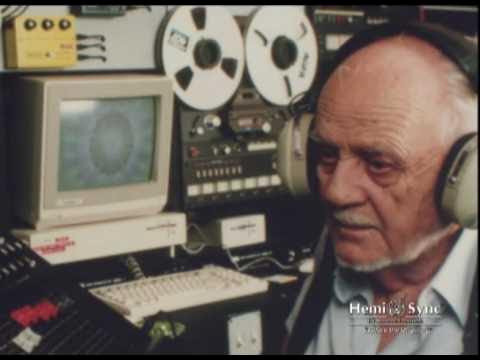
The only other “institute” I can think of that caters to folks who want to explore psychic skills is the Monroe Institute. The buy-in for this place is even higher, but it is not the same as mediumship development. In fact, the entire program is designed to expand a participant’s consciousness for healing purposes. It’s admirable. The retreats are designed after the famous Gateway Experience Tapes, recordings that were narrated by Robert Monroe, a broadcasting executive and consciousness explorer who came to fame in the 1970s. Note: If you listen to the tapes on YouTube, the intended experience of hemispheric synchronization is impossible due to compression of audio quality. I’m not sure what it would take to experience their hemispheric synchronization, but perhaps it is just scheduling the retreat.
When I look at the mediumship style of Chip Coffey, I see something different. I can’t be confident overall, but when I watch him on a paranormal network show, I think he’s lying. I think he’s aware of his location, the ghost stories there, and makes quick guess-work that’s not really compelling to a modern audience. Paranormal mediumship is actually far easier than public work because the scope is limited to the physical location, the historical significance of the location, and the era of people being contacted. Alternatively, it’s harder because you don’t have a live human in front of you to draw upon ancestral consciousness. Chip’s delightful; don’t get me wrong. The way he presents the information is exactly how network paranormal television prefers it. I keep holding onto hope that paranormal storytelling gets better, and I might be holding for a while.
A couple other nameless paranormal mediums evoke something in me, a curiosity, playfulness, and excitement. These people are just as powerful as the names on this list, but I won’t disclose them because I don’t want to jinx where they’ll go with it. There are some folks out there who are trying to make a name for themselves, which is serendipitous, and I earnestly believe that they will provide similar blueprints as the fleeting celebrities mentioned. No matter the quality of celebrity, it is the blueprint that will persist with the effort that’s been shared already, the idea that public mediumship exists so that new mediums aren’t ostracized from society based on their spiritual initiations. In fact, a resurgence in mediumship, and other psychic or spiritual talents, is itself compelling. I won’t answer this definitively because the answer seems kind of obvious and kind of vague, but it makes me wonder why? For what reasons could reintegration of spiritual abilities into society be happening? You may call it all “new-age,” or “woo-woo,” but you’d be an idiot. 🤡
To synthesize, we’ve talked about:
1. Accountability - The idea that the medium should develop to accommodate the audience or participant, and the impact of trauma, especially that which results in death. Moreover, that dismantling and refusing white supremacy is necessary to do work with integrity.
(Relevant to Personal Ideology; accountability has to be important to the medium in order for it to be considered in development, even if someone is called-out publicly. Development may be stifled and gifts stagnant if accountability is not integrated into personal shadow work. However, if the medium is less witchy and more religious, that religiosity often provides a scapegoat for personal ideology within the cultural subgroup of that religion, like Jesus’ death on the cross as a final penance for all sins current. This is why witches fall down dogmatic, right-wing pipelines of spirituality; they are not willing to be held accountable, and they find a supernatural means to escape it.)
2. Charisma and Performance - To participate in mediumship, one must perform charismatically, and empathetically, in order to present the logical, ancestral information that comes through the medium to the querent, whether or not the querent sees the medium as credible in their abilities to communicate with the dead.
(Relevant to Cultural Ideology; The adoption of celebrity mediums changes the meaning of who and what a medium is or does. Mediumship has been welcomed, so long as there is “love and light,” into mainstream cultural production. Spiritual showmanship isn’t new, but in the past, it would have been a communal or relational spectacle or event. Today, it is a job market with ties to Hollywood fame and art-making. Mediumship is not what it was, so it begs the question, what is it becoming?)
3. Structuring and Standardization - There is a contemporary effort to structure and standardize participation in psychic mediumship. The benefit is that it closes gaps between mediums so that we meet and develop together. The cost is that our abilities are sanitized for public consumption and the market has become over-saturated with both “real” mediums and psychic grifters. (Costs outweighing, my friends!)
(Relevant to Cultural Ideology AND Institution; While learning psychic mediumship is fun and cool, we are missing the mark when it comes to spiritual implications and discussions of human consciousness. There are many reasons for that, and it is not to fault any one medium, or even the group of us. If we know there are problems here, and I’ve pointed some out clearly, we ought to take steps toward something useful. As a contemporary group of mediums, our development is stifled by many external factors. If we changed our definition of success, culturally, what role would the medium take in society?)
Reading is WHAT? (FUN-duh-MENTAL!)
While I would love to track all the ideological records of the mediums on stage, that would be too much. Instead, we’re gonna pivot to me, your ring-leader. I’ll stand on the flaming tight rope and walk it, maybe dance. The progression of personal ideologies fits nicely into what’s been written so far. We’re going back to The Ship of Theseus (or, are we??).
There is this misconception that echoes loud upon the stage of our mediumship showcase, and it is that mediumship (as we came to know it historically) is the same as what it is now (how we practice it). I don’t believe that mediumship, nor psychic talents, have ever faced a mirror quite like what we’re doing with it today.
That can be said about a lot of things, like literature itself, maybe. Actually, that’s a good metaphor. Think about it this way, you are able to walk down to the corner bookstore and pick up a copy of Moby Dick and a copy of an academic assessment of Moby Dick. Dear reader, that’s innovative when we look at the timeline of human history. You are not only capable of reading the original text, you’re closer to, and maybe exceeding, the knowledge of the time period in which it was written. Because literacy is so fundamental, it is attacked when fascism comes knocking, right? Books are burned. You know who else was burned?? (Mhm.) The decline in literacy is intentional, which is why I said all that, and U.S. literacy is abysmal, so how many mediums are literate enough to be giving “real” readings? (If they can’t READ!! Nooo!)
From my experience, which is unique, reading literal books IS mediumship development. It’s so simple that it’s annoying. My experience is unique because although I’ve been practicing a short time, I don’t do anything else but write and practice my spiritual talents. The last four years of my life has been dedicated to studying and writing. Not many mediums are offered that availability. My clients aren’t lining up the length of a Hollywood guest list, so the practice I get with others is limited. I give a lot of free readings to my queer friends, though. Again, this is due to over-saturation, not my capability. You’ll notice that I’d rather write about my findings than showcase them so much. Yet, I am a Leo Rising and I long to be a star! ✨ (Currently capitulating that I might be dead before people know my name, lol, cross your fingers for me either way!)
Removing the limelight, my practice is solid. It’s developed rapidly and authentically. When I catch myself in a shadow, or meeting one, I retain my agency and feel pretty good about the decisions I make these days. I’ve learned more by clearing the smoke from the mirror, which is easier said than done, but well-worth the chase. Like, fuck, no one who has met me has been able to tell me, after seeing me work the talent, that I’m not “real.” Mostly, people are silent, and I decipher that as profound pause. My success is defined by relaying the message in the best interpretation possible, not by the performance that happens in the room, nor the confirmation of evidence of spirit connection. I’ve seen the evidence of successful progression for myself in such a way that I’m proud, honored, and grateful. Thank the ancestors and my spirits for that! (U rule!)
Ideology is a system, a “set,” of beliefs and values. These relate to our decisions, or our will to freely choose our next action. Our ideologies are border-walls to our freedom of choice. When we talk about ideologies, we’re often condemning them with the acknowledgement that these border-walls should not exist; it’s costing us our freedoms. The etymology of ideology is interesting and reminds me of my last paranormal essay, “am i psychic?,” where I explain briefly that systems develop from noticeable patterns. That doesn’t mean that the systems are good or working, though. It just means that someone noticed it, and capitalized on it by standardizing it for everyone else (at least, in more recent human history). My argument in the article was that there is more to “being psychic” than enhanced pattern recognition. For example, mediumship needs proficiency in symbolical image and interpretation of meaning. Those things are taught within the confines of literature and writing. We cannot progress imaginal skill unless we come out of the trance or meditation and enter the realm of learning. At some point, you’ll run out of images and the sense in which you make meaning of them. (I also visited this issue of decline in psychic ability in the part about Targ’s theory of “analytic overlay.”)
Going back several more articles, and you’ll find “Which way??,” an article that argues that belief is at the core of paranormal investigative work, but there is no core belief within the subgroup, save for magical thinking where I attribute spirit communication. Magical thinking is present in much larger populations, so it’s more pervasive than we give it credit for. In this article, I’m trying to present belief as a philosophical element, not a paranormal one. I also try to explain how philosophical belief is not the same as social inclusion signaling, two different ideas that are often conflated within the paranormal community. Suffice it to say that folks are confused and misinformed about the importance of belief in the work, whether it be psychic, paranormal, spiritual, philosophical, whatever.
Comparing the two articles, written barely three months apart, I can see the through-line of what I’m trying to express, or what I’d glossed over in those other articles just enough that I have to explicitly state something different and evolved. The more recent article states, “belief is only important so that we can say it’s irrelevant.” I go from, “belief is important,” to “it isn’t” in three months, which probably equates to the time it takes me to read 3-6 books. I will take accountability for the fact that I cited Kripal’s text in the first article without reading it, though I knew it would be helpful to the audience to grab a copy for posterity and my copy had not yet arrived. This detail, albeit revealing nothing too scathing by any measure, reinforces how the change was made. Once I read and integrated the reading of Kripal, my perspective changed.
With hindsight, I can state the more evolved thing:
As paranormal investigators and psychic mediums, belief is at the core of our work, though discussion of it should not, but often does, take away from the work itself. Belief is a dichotomy mended by dialectical imagination. Belief cannot be a barrier of entry into this particular realm of thought and practice. Instead, it could be monitored as a data set that is compared with collective readings, astrology, and paranormal activity (for example). Adopting a change in how we interact with beliefs may be integral to where the futures of the fields end up. Moreover, if we commit to change sooner than later, we may find more agency as professionals, leaders, and practitioners.
Idk, man, that’s pretty dope to think about. My favorite comedian and mathematician, Sammy Obeid, tells a joke in his special “Social Justice J1hadi” about how comedians take everything on the table that’s obvious and easy, leaving content about political tyranny and Palestinian liberation against Israeli occupation there for someone else to take, and Sammy Obeid is happy to take it. Sure, he’s Palestinian; he’s also the better comedian! I feel similarly about the queer, decolonial, and feminist interpretations of mediumship and paranormal investigation. While those are technically literary theories of academic study, they tend to become a sort of ideology when removed from specific context. I don’t know how to remove that ideological perspective altogether—I think it might make me less human in our world if I did—but it’s the scraps. Where others see trash, I see compost and the future in a vibrant, vast garden. The garden is also the library.
leave a tip if you wish! 💝