

The Future of Expression
reclaiming the creative sovereignty of artists

Recently, I was asked in an interview a really interesting question: “What do you hope for artists in the future?”
My answer was about expression.
I said, “I hope more artists can work without obligatory moral/virtue signaling.”
They all clapped and loved the answer, but I didn’t have time to explain myself or theorize. I recently learned that the other artists were agreeable because it spoke to the idea of creative sovereignty. The beauty inside our hearts must be expressed, somehow, and I realized I wasn’t the only artist wanting more for myself.
As I’m thinking about it now, I mean what I said, but I also mean the age-old advice that writers often get and that’s “write what you know,” because I think it helps ease the obligation.
Yes, people experiencing fascism need our art. But we also need YOUR art.
Making and writing are recycling (I also say thievery), but your perspective of your story is unique, and I think it does an artist better to push themselves away from replication. There are a few types of artistic replication: a.) the exercise of practicing like those artists we admire, b.) replication alongside a trend to market the work, and c.) the replication in the process of art-making (like print production). It is easy for artists to get lost in replication, especially when capitalism forces consumption on mass-scales for successful economic gains.
In the literary world, I believe that we’re losing touch with the complexities of language and written word. Writers sanitize out of fear. Ocean Vuong reflects on this in more depth, and after seeing this reflection, I recognized within myself something that had been hidden, squashed down, and ignored for so long. Time was revealing the creative blockage because things are not as they once were, and my preconceived notions of reality are not what they once were.
More than anything else I needed to express, I longed for (charisma) uniqueness (nerve and talent). Uniqueness may be hard to qualify, but as an Aquarius sun/Leo rising, perhaps I’ve grown to recognize it in such a way that celebrates it’s becoming in art and writing. The more I see a writer or artist breaking a learned or replicated rule, I find joy in that expression. On the other hand, I’m learning to be a unique observer of art, someone who knows the schema and reason behind my interpretation.
Because of fascism, our aesthetics are similar and influenced by trends; art products go through viral trends so that they can sell out of big online warehouses; and we are left with less and less opportunity to market and profit from the work we do, especially if we’re more marginalized artists (only showing up in spaces where we feel truly safe). We’re already inside fascism, so our options are more limited than we realize. Inside the core, we’re convinced that we’re doing cultural justice, but our art is an example of the hellscape we live in and perpetuate. Further, the online spaces where we consume art are now competing with AI bots and AI generating “artists.” Our art and cultural consumption quite literally overshadow the polycrisis happening on Earth in Earth’s most urgent moment. So, I see where the importance of that work in morality and virtue are important. I see why it’s an inclination of an artist to make meaning for people that politicizes them to action.
Bad art tells and does not show. Bad art says, “this is what this is, don’t work for interpretation because I already did it for you,” and it’s very…arrogant. It’s also a strategic choice because there are moments where doing that works with a purpose.
»I like subversion, a lot, but I’m also trying to find the concept and generate ideas around something novel, or something so innovative/recycled that it’s received as entirely new. By something, I mean a literary…device? Theme? I feel like I can only touch it when I theorize, but it’s an Idea (primordial). It will come to be known, and due to my recent conversations with different artists, we’re all sorta trying to get to know the thing without it having been born just yet. Nothing happens in a vacuum, so the work that other disciplines do for writers and artists expands what we are able to do. This becomes evidentiary in theory, but perhaps always in retrospect.
When I think of a future for artists, what my imagination does with “future” is what qualifies the answer to the question. I get lost in speculation. What future are we talking? One year, five? The next generation of artists? A dream-future where liberation has been abundant, and where scarcity lives as a historical, mythological warning? When I gave the answer, I literally thought about if I could sit down with a group of local artists tomorrow and lead a discussion about it. My presumption of how the future unfolds is up to the ones becoming it, and for now that was all the people meeting in that room for the interview, and any affiliates.
The future is hard to imagine because the immediate dangers of fascism, the ecocide and global climate change, the global genocides and domestic genocides, etc. require action right the fuck now. We are exhausted by the constant grief in this progressively deadly nightmare of a timeline. Currently, making art is an insane privilege to have.
When we’re called upon by the larger online zeitgeist of leftists (and those working their way left), we’re addressed like, “why aren’t we DOING anything???” And I mean, I don’t hate to say this (nerve), but people been doing. Especially artists!! C’mon. How much art do you need to see to take action into your own hands? Get real.
This critique comes with this idea of a.) urgency and b.) grandiosity. (Related to learned white supremacy.)
Most aware folks act with urgency because it makes them feel like they’re doing something when their nervous system is shot and they begin rapidly discussing what they’ve become aware of. In the DSM-5, this is called rapid-cycling and it happens for people who experience mania. Mania isn’t just a phenomenon related to mental heath disorders, it’s also related to wide-spread panic inducing events in history. Within a 12-month period of extreme political and cultural distress, a person can rapid-cycle as if they truly lived with bipolar disorder. There is evidence of this behavior in people lately, within the last few years. And, if someone is at the helm with this sort of stress, one can be misdiagnosed, or institutionalized and “healed” based on the notions that their issues are entirely personal. Our mental health system hardly has the infrastructure to take on these major events because the treatment is liberation, a new economy, and decolonization of the mind, not necessarily personalized medicine.
Grandiosity is a problem because of scale. This issue is present in the leftist conversation about “community,” as well. First, in the core, we hardly know what true communal-style interaction means or looks like, and none of us are sure about what we want it to look like. Second, when people enter community spaces, they often abandon the effort because conflict is mishandled, or the group norms/mission aren’t exactly being lived as they are preached. The polycrisis is huge, and that’s obvious. Over and over again, our elder activists, especially Black women, tell us that there are infinite ways that we can resist and liberate. Everyone wants to be the one who throws the molotov cocktail, and no one wants to be anyone else with any other function. And the urgency of our states of being fuel this destructive, rebellious desire. This causes people to burn out and give up early in an effort that’s generations in the making.
Art is an outlet for this internal call-to-action, or rebellion. A lot of people turn to art for therapy, as well. It soothes our nerves. There’s so much beauty, joy, and love that art can give us when we partake in the making of it. Art is effective, revolutionary.
Is art revolutionary, though, when we’re requiring replication? Where is their room for revolution when we beg for sameness? (A pre-COVID world sameness.) How does it heal when it doesn’t make room for the expression of new truths?
This idea that artists should push to perform virtue signaling to audiences is not a trend to endorse. Or, it’s become a trend that is endorsed to ease the headache of consumers in political turmoil. Exploring morality is trendy because the panic and paranoia of a war-torn world enslaved by late-stage capitalism forces us to respond like we’re under attack. We are, don’t get it twisted. However, I don’t think this is a true expression of our philosophical urge to explore morality and virtue and other really important concepts worth exploring. While we are already in a fascist period, art must transform. And, if I’m getting real about it, while fascism accelerates, artists will be persecuted not only for rebellion, but for telling the truth.
» See recent news about such persecution.
The Trial of the Spokane 3: ‘The entire weight of the United States government’ by Range Media
‘This is injustice’: how leftist zines were used to sentence anti-ICE protesters to decades in prison by The Guardian
“As much as you want to lie, the truth is a rock. You can’t break the truth. You can break it up, maybe. But in the end, when it’s there and it’s visible, the truth will always come out.”
Justice Forral, one of The Spokane 3
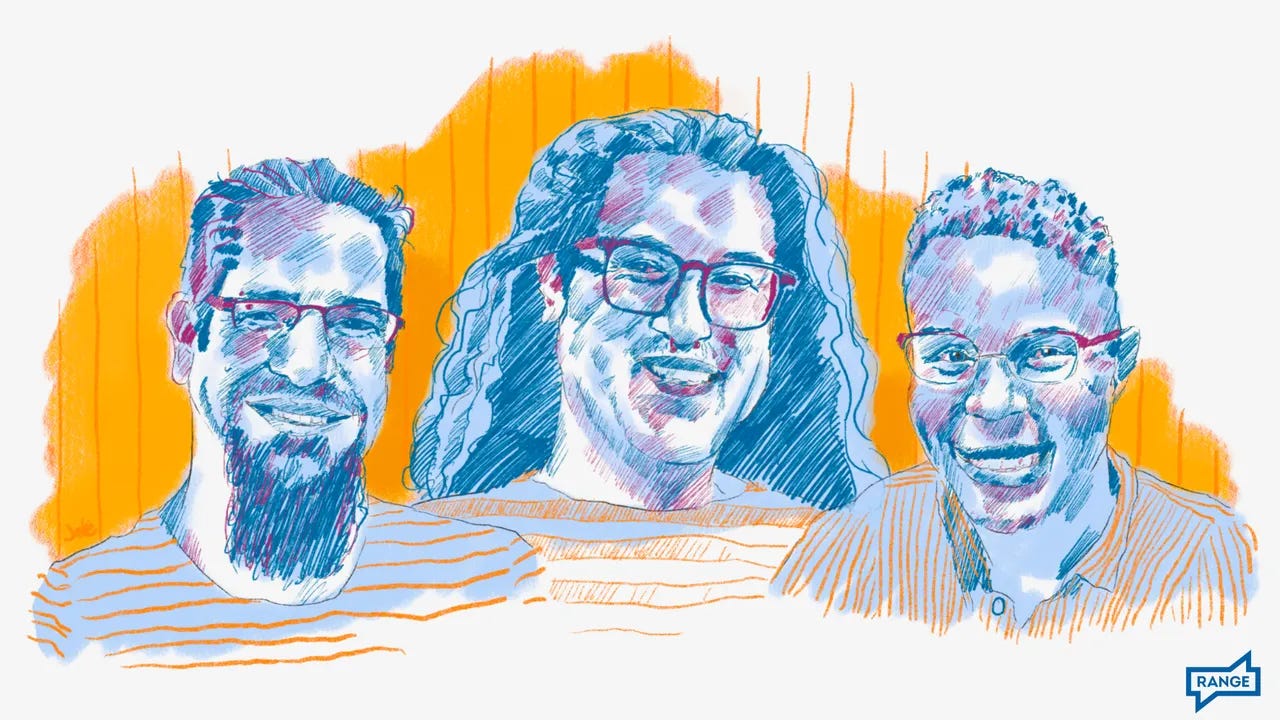
While most of the city was concerned about the thunderstorms rolling in with the heatwave a few weeks ago, a jury out of Spokane, Washington placed a verdict which claimed that Jac Archer, Justice Forral, Bajun Mavalwalla II are guilty of “Conspiracy to Impede or Injure Officers,” following the June 11th, 2025 protesting of the ICE transfer of two young, asylum-seeking men in Spokane to an ICE facility 300 miles away, in Tacoma.
The same Mayor who responded to this verdict with her understanding “that this prosecution was politically motivated,” and “meant to make an example out of people who disagreed with federal immigration policy,” also defended the Spokane Police Department facilitating the ICE transport and said that protesters had broken the law by impeding public rights of way, a damning sentiment against the protesters who were protecting their neighbors. Her statements lack confidence and integrity, as any politician might lack.
The attorneys for defense of the Spokane 3 plan to appeal the verdict. The ACLU of Washington makes it clear that “the Administration has a demonstrable history of using the Department of Justice to silence and punish its critics,” and uphold their concern regarding the rights of citizens to protest and maintain freedom of expression.
News of the verdict came as an abhorrent clobbering alongside the congruent protesting in Newark, NJ outside of Delaney Hall, a detention center, with advocates having persisted for several days to support the hunger strike of detainees. DHS denies poor conditions, or abuse of detainees, while there have been reports otherwise. So too, Gazans, who were celebrating Eid al-Adha as a form of resistance, continue to suffer the bombardment of the Israeli regime with instructions from Netanyahu to seize another 10 percent of Gaza. While Trump flirted with the idea of a “ceasefire,” there had been reports of bombing on an Iranian military site, as well as in southern Lebanon.
I was not part of the crowd at A.M. Cannon Park when Forral asked them to consider his question, “what’s more powerful?”
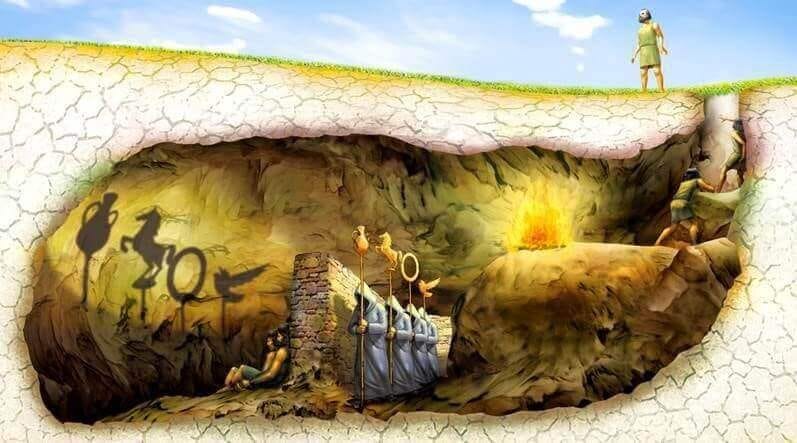
RANGE reporter Erin Sellers notes that Greek philosophy helped the crowd of supporters determine their answer that the truth is, indeed, more powerful. To say that these activists are integral to the Spokane community would be an understatement because there are no words. After all, they’re facing 6 years in prison, or a quarter of a million dollar fine, for the conspiracy charges. Is the issue only about conspiracy, or are they standing in a courtroom representing something much greater? (Truth.) And here—in Spokane.
Forral is not wrong that the truth is visible, observable, and knowable. From where he and the rest of the 3 stand, the stakes are high. They’re well aware that the stakes for the detainees are even higher! They’re bravely fighting charges of conspiracy for enacting community protection, an expression of community care, something all of us shoulda-coulda-woulda done. This is the resistance that people crave to enact, and yet feel powerless to do so out of fear, or anything else. The Spokane 3 are being made an example of the current administration’s persecution of activists, the silencing of protesters and their constitutional freedoms, which uphold their right disagree with immigration policy and enforcement, the literal breakdown of our country’s ‘democracy’, in which there was this idea that such constitutional freedoms were always given by the U.S. leadership and policy to any and every citizen within the nation.
For Sellers to have recorded Forral speaking on the pursuit of philosophy about the nature of truth is illustrative of Plato’s Cave. Sellers was witness to a revelatory moment in history, in my opinion, something worth thinking about under the dark clouds of this thunder and lightening. It is a moment in which the art of writing is able to reimagine so that the communication of such truths may spread to wider audiences in need of such historic information.
As an artist living at the core, creative sovereignty is an act of rebellion. Your art doesn’t have to reflect the “right” moral point. Your art is the expression of it. Your existence as a writer is living it. If the administration doesn’t want us expressing truths, all truth, in all of it’s wonderful and weird subjectivities, creating is a way to say, “shove it.” What Art (primordial) is becoming may find opportunity to blossom without these outdated, unwanted, or oppressive limitations.
At the core, we are responsible for so much. Our art-making shouldn’t be critiqued by consumers who only want what they want out of fear or instant gratification. (Similarly, we can stray away from academic critique because it limits our expression in certain ways, too. At least, in some part. Learning is important.) We can’t emphasize these urgent, grandiose ideas anymore. Instead, we should be looking toward each other for answers. We can grieve, and feel fear, but we can’t be consumed by a roller coaster in such rapidity if we want to take on the responsibility our morality asks of us.
“Write what you know” is advice that comes from a uniqueness of my own work which prefers locality. As much as I love collective, global ideas, my work is unique and arguably better when it’s localized. I’m not writing for everyone; I’m writing to express something internal that needs to materialize on the page. My job as a writer is to idealize and materialize, which is a whole process. The functioning of my expression is more important than maintaining an arbitrary virtue that could change in a day. Nonetheless, I’m also something of a philosopher, and especially knowledgable about the supernatural/paranormal elements. I give myself permission to also become the critique as a seasoned writer. I do get lost there, sometimes, and it’s self-sabotaging behavior, but I’m relearning to use it for artistic benefit, or the expression of very specific ideas.
Some writers hate this advice, and I totally understand where that comes from. It’s basic, right? Just because it’s basic doesn’t mean it’s not powerfully fundamental to how we express ourselves in writing. And, “what you know,” refers to something you really gotta know. It’s not something that you pick up in a google search or on a wikipedia page. What you know is fundamental to how you deliver context and meaning to those searches and snippets of knowledge. Sometimes roots are basic. We need our roots.
We Have the Answers

H.G. Wells published The War of the Worlds in 1898, after publishing The Time Machine a few years prior. Considering the breadth of dystopian literature that follows this, we can mark the work of H.G…